
Company
Allied Artists Pictures
The Poverty Row survivor that clawed its way upmarket—bankrolling body-snatcher paranoia and, decades later, a run of prestige giants—until its ambitions finally outran its cash (1946–1979).
1 project
About
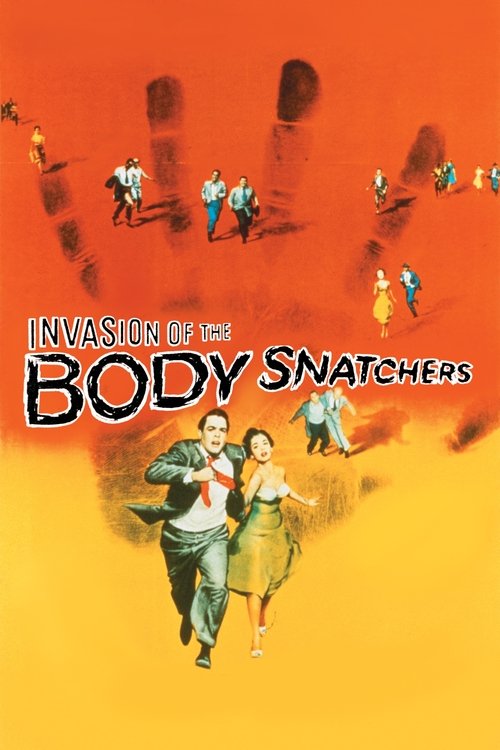
In 1956 a studio best known for Bowery Boys knockabout and B-westerns released one of the most quietly terrifying films of the decade: Don Siegel's Invasion of the Body Snatchers, a pod-people parable that would outlive nearly everything around it. That such a picture came from Allied Artists was the company's defining paradox—a former bottom-feeder forever reaching above its weight, chasing a respectability it could rarely afford.
Allied Artists grew directly out of Monogram Pictures, the Poverty Row factory that had ground out serials, Charlie Chan mysteries, and cut-rate cowboys since the early 1930s. In 1946, prodded by the young executive Walter Mirisch, president Steve Broidy launched a prestige subsidiary, Allied Artists Productions, to make bigger and better films than the Monogram name could ever carry. The strategy worked well enough that by 1953 the parent company retired the Monogram brand and renamed itself the Allied Artists Pictures Corporation, betting its future on a seat at the majors' table.
Reaching for respectability
For a time the gamble looked shrewd. Broidy courted A-list directors and financed pictures far grander than the studio's origins suggested—William Wyler's Friendly Persuasion (1956), Billy Wilder's Love in the Afternoon (1957), and a U.S. release for the sprawling epic El Cid (1961). But the arithmetic of prestige was brutal: a single expensive flop could erase the thin margins of a dozen programmers, and Allied Artists lacked the reserves of a Metro or a Paramount to absorb the loss. The company lurched between ambition and retrenchment, and Broidy left in 1965.
Emanuel L. Wolf took the helm in 1968 and resumed production, though on shrewder terms. Rather than manufacture films outright, Wolf steered Allied Artists toward financing and distributing a few carefully chosen prestige projects—and for a remarkable stretch in the 1970s the bets paid off spectacularly. (His investment vehicle, Kalvex, would formally merge with the studio in 1976 to form Allied Artists Industries.)
The prestige gamble and the fall
In quick succession Allied Artists put its name to Bob Fosse's Cabaret (1972), the Steve McQueen and Dustin Hoffman prison saga Papillon (1973), and John Huston's The Man Who Would Be King (1975). Cabaret alone swept eight Academy Awards. For a moment the old Poverty Row name sat improbably beside the industry's most acclaimed films.
It was the peculiar fate of Allied Artists to make its greatest pictures only when it had almost nothing left to make them with.
The triumphs were deceptive. A handful of distributed hits could not underwrite a full studio operation, and the losses on lesser projects mounted. Undercapitalized and overextended, the company slid toward insolvency, and in April 1979 it filed for Chapter 11—closing out a run that stretched, in one form or another, from Monogram's founding through more than three decades of the sound era.
Its assets did not vanish. In 1980 the film library was sold to Lorimar, the television powerhouse; when Lorimar merged into Warner Communications in 1989, the catalog followed, and much of it survives today within the Warner Bros. holdings. The lot and the corporate name faded, but the films endured.
Allied Artists still matters because its story is the story of the second-tier studio in miniature: the eternal climb from B-pictures toward prestige, the fragility of a small house that lives on hits it cannot afford to miss. A company born of Monogram cheapies stamped its name on Body Snatchers, Cabaret, and The Man Who Would Be King—proof of how far a little studio could reach, and how little it had to catch itself when the reach came up short.
Projects (1)
People here
Work at Allied Artists Pictures? Add it to your profile →
Reviews
Sign in to review Allied Artists Pictures.
No reviews yet.