Company
Biograph Company
The New York peep-show outfit that became D.W. Griffith's laboratory for the language of cinema and minted stars like Mary Pickford and Lillian Gish, only to be swept away by the feature film it refused to make (1895-1916).
20 projects
About
Before there was Hollywood, there was a converted brownstone at 11 East 14th Street in Manhattan, where a company of anonymous players turned out a movie or two every week under a director nobody outside the trade had heard of. Within five years those unknowns were the most famous faces on earth, and that director had rewritten the grammar of the screen. This is the paradox of the Biograph Company: it trained more of the movies' founding royalty than any studio of its generation, then refused to make the kind of film that royalty had learned to demand, and quietly disappeared.
It began not with a film but with a machine. The American Mutoscope Company was incorporated in late 1895 by W.K.L. Dickson, the Edison technician who had helped build the Kinetoscope, together with Herman Casler, Henry Marvin, and Elias Koopman. Their first product was the Mutoscope, a hand-cranked flip-card peep-show device engineered to undercut Edison's own viewer, paired with a large-format Biograph camera whose wide gauge yielded unusually crisp images. As the novelty of peep shows gave way to projected pictures, the firm was renamed the American Mutoscope and Biograph Company in 1899 and, finally, simply the Biograph Company in 1908.
Its business was the business of the age: short films, one or two reels long, produced on a relentless weekly schedule and sold to the storefront nickelodeons multiplying across America. In 1908 Biograph joined Edison and the other major manufacturers in pooling their patents into the Motion Picture Patents Company, the so-called Edison Trust, a cartel that aimed to control the entire American film business through licensing. For a few years, Biograph prospered inside that protective ring.
The Griffith years
In 1908 a struggling actor and playwright named David Wark Griffith was handed a camera and directed his first film, The Adventures of Dollie. Over the next five years he directed hundreds of shorts for Biograph — commonly counted at around 450 — and refined the tools that turned filmed theater into cinema: expressive close-ups, parallel cross-cutting, a new rhythm of editing. Films like A Corner in Wheat and The Musketeers of Pig Alley caught a young art form learning to think.
He did it with an extraordinary stock company. Mary Pickford joined in 1909; Lillian and Dorothy Gish arrived in 1912; Mabel Normand, Blanche Sweet, and the future Keystone founder Mack Sennett all passed through. Biograph, in keeping with the era, refused to publicize its performers' names, and the actress known only as "the Biograph Girl" — Florence Lawrence — became a test case for the coming star system when a rival lured her away with the promise of billing.
The turn and the end
The undoing was a failure of nerve about length. As Italian spectacles and American independents proved that audiences would sit for feature-length pictures, Biograph clung to the profitable short. Griffith shot the four-reel Judith of Bethulia in 1913, the studio's first true feature; alarmed by its cost, the company held the release and moved to make him a supervisor rather than a director. In October 1913 he walked out, taking most of his company with him, and went on to make The Birth of a Nation for others.
The Trust died soon after him. In 1915 a federal court found the Motion Picture Patents Company in violation of the Sherman Antitrust Act, dismantling the licensing scheme that had shielded Biograph from open competition. A venture to film stage plays in partnership with theatrical producers had already faltered, and the studio fell back on reissuing its old shorts. By about 1916 it had effectively stopped producing new films, lingering afterward as little more than a name.
Yet Biograph outlived its own extinction. Its studio at 807 East 175th Street in the Bronx survived and was leased to other producers for decades. And because motion pictures could not yet be copyrighted as such, Biograph — like its peers — had deposited paper contact prints of its films at the Library of Congress; that Paper Print Collection preserved thousands of early shorts that would otherwise have crumbled to dust. The company that lost the future by refusing to make it long remains, frame by fragile frame, the seedbed where the movies learned to speak.
Projects (20)
- A Day's Adventure
A Day's Adventure
1915
- Old Offenders
Old Offenders
1915
- A Dangerous Foe
A Dangerous Foe
1913
- A Misappropriated Turkey
A Misappropriated Turkey
1913
- A Tender-Hearted Crook
A Tender-Hearted Crook
1913
- All for Science
All for Science
1913
- For Her Government
For Her Government
1913
- Just Gold
Just Gold
1913
- The Crook and the Girl
The Crook and the Girl
1913
- The Stopped Clock
The Stopped Clock
1913
- My Hero
My Hero
1912
- The Blind Princess and the Poet
The Blind Princess and the Poet
1911
- The New Dress
The New Dress
1911
- The Sorrowful Example
The Sorrowful Example
1911
- The Spanish Gypsy
The Spanish Gypsy
1911
- On the Reef
On the Reef
1910
- The Duke’s Plan
The Duke’s Plan
1910
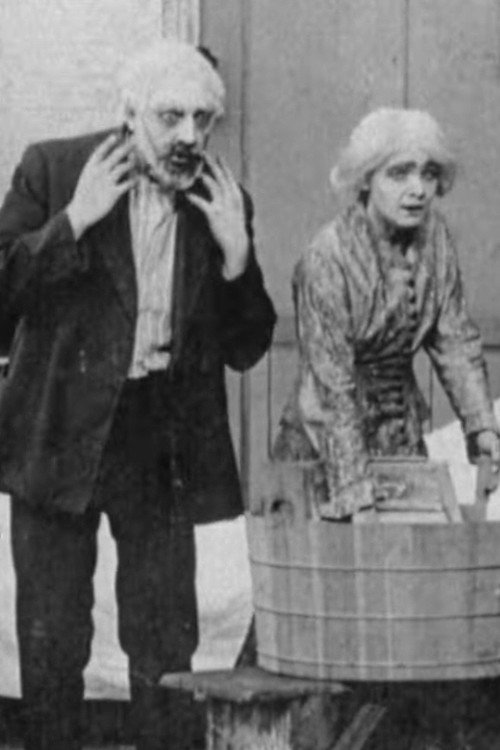
The Necklace
1909
- The Road to the Heart
The Road to the Heart
1909
- For a Wife's Honor
For a Wife's Honor
1908
People here
Work at Biograph Company? Add it to your profile →
Reviews
Sign in to review Biograph Company.
No reviews yet.