
Company
New World Pictures
Roger Corman's scrappy drive-in factory that bankrolled Bergman and Fellini between the biker flicks and creature features, then outgrew its founder and dissolved into a television empire (1970-1997).
3 projects
About
New World Pictures was active during the same period when drive-in audiences were drawn to women-in-prison films, killer-fish movies, and a road race that featured points for running over pedestrians. At the same time, the company served as the American distributor introducing Ingmar Bergman and Federico Fellini to Academy voters. This juxtaposition was not a coincidence but a core element of the business model: a system for generating revenue from low-budget genre films, which was then reinvested into the most refined examples of international art cinema.
The Corman Factory
Roger Corman founded New World Pictures in 1970 with his brother Gene, following years of work as a director and producer for American International Pictures. Seeking independence from the constraints of other studios, Corman created a lean, efficient production system, operating from modest converted offices rather than a traditional back lot. There were no large soundstages; Corman emphasized location shooting, strict adherence to schedules, and staying under budget, all of which were central to his approach.
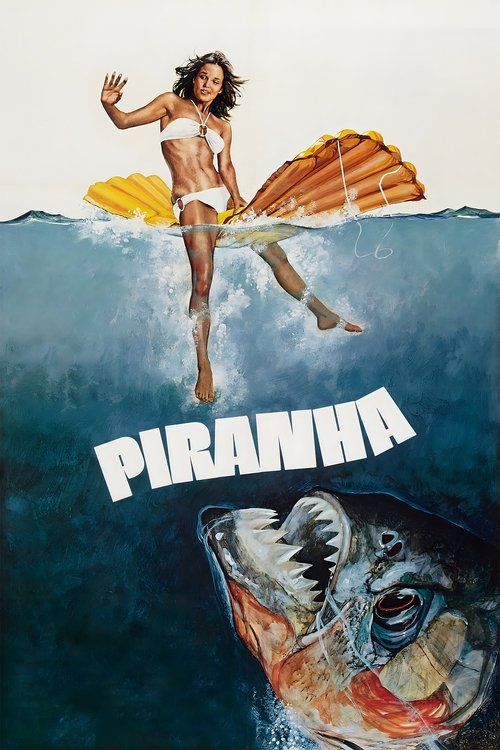
The company's output was both controversial and commercially successful: *Death Race 2000* (1975), featuring David Carradine and a young Sylvester Stallone; *Piranha* (1978), directed by Joe Dante and John Sayles; and *Rock 'n' Roll High School* (1979), directed by Allan Arkush and starring the Ramones. Equally significant were the careers the company helped launch. New World provided newcomers with minimal resources and creative freedom: Jonathan Demme made his directorial debut with the prison film *Caged Heat* (1974), and Ron Howard directed *Grand Theft Auto* (1977). Writers, editors, and directors who worked at New World went on to prominent roles in Hollywood.
In parallel, Corman used the profits from the drive-in films to acquire foreign art films that were otherwise difficult to distribute in the U.S. These films brought prestige that could not have been achieved through other means. New World handled the U.S. release of Bergman's *Cries and Whispers* (1972), which received an unexpected Best Picture nomination; Fellini's *Amarcord* (1974) and Kurosawa's *Dersu Uzala*, both of which won the Academy Award for Best Foreign Language Film. The same company that produced *Piranha* also released René Laloux's animated *Fantastic Planet*. Highbrow and lowbrow coexisted on the same financial ledger.
After Corman: Television, Marvel, and the End
In 1983, Corman sold the company for approximately $16.5 million to a group led by Harry Sloan and Lawrence Kupin, and immediately founded a new company, Concorde-New Horizons, to continue producing films in his style. New World without Corman evolved into a different entity. The new leadership pursued expansion, establishing a television division that produced hits such as *The Wonder Years*, *Crime Story*, and *Sledge Hammer!*. In 1986, the company made a surprising move by acquiring Marvel Entertainment Group. However, the company's ambitions outpaced its financial resources. Debt accumulated, and in 1989, financier Ronald Perelman took control. Marvel was separated and eventually taken public, while the film division gradually faded.
What remained of New World rebranded as New World Communications, a television-station group. Its most significant action was a 1994 alliance that brought twelve stations into the Fox network, making it a target for Rupert Murdoch. In January 1997, News Corporation acquired New World Communications, and the enterprise that Corman had started as a home for low-budget, fast-moving films ended its independent existence as a collection of broadcast assets. There was no storied studio lot to auction off; its real estate was its library, which dispersed through successive owners, with the television titles eventually absorbed into the Fox catalog now owned by Disney.
New World still matters because it demonstrated a counterintuitive truth about film production.
Commercial genre films and artistic cinema are not mutually exclusive but part of the same economic cycle. For a decade, some of cinema's most ambitious films were funded by some of its most commercially exploitative.
In the process, it helped launch a generation of filmmakers who learned, under Corman's strict methods, how to create compelling work with limited resources. The company is no longer in operation. That training ground has never closed.
Projects (3)
A platform appears here when one of this studio's titles streams on it. Click to filter — pick several to combine.

People here
Work at New World Pictures? Add it to your profile →
Reviews
Sign in to review New World Pictures.
No reviews yet.