
Company
Vestron Pictures
The home-video upstart that danced its way to one of the decade's biggest sleeper hits, then went broke chasing a second one (1981–1991).
2 projects
About
Vestron is remembered as one of the most surprising success stories of 1980s Hollywood. In 1987, one of the most profitable films of the year, relative to its production cost, came not from a major studio but from a Connecticut-based company whose primary business was shipping videocassettes to rental stores. Vestron had no intention of producing films; its original purpose was to sell tapes. Yet for one summer, it outperformed the major studios that had long dismissed it.
Founded in 1981 by Austin Furst, a former HBO executive who had been tasked with closing down Time-Life Films, Vestron recognized early on the potential of videocassette recorders to transform the film industry. Based in Stamford, Connecticut, Vestron Video licensed home-video rights to films that major studios, still hesitant about the new format, were willing to offload. Within a few years, it became the largest independent home-video distributor in the United States, profiting from the growing popularity of home video.
That success, however, was also a vulnerability. As the studios began to realize the value of their own film libraries, they retracted licensing rights and brought distribution in-house. To remain viable, Vestron needed to own its own content. In January 1986, it launched Vestron Pictures, a theatrical division to produce and release its own films, feeding its video distribution pipeline.
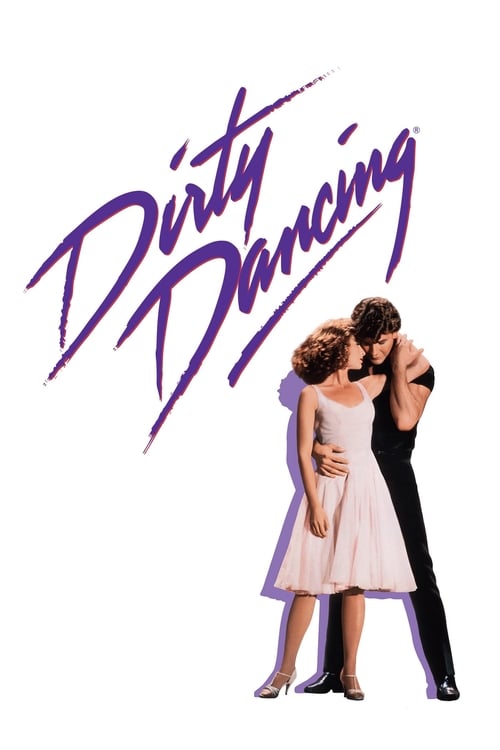
The unexpected success of *Dirty Dancing* (1987), directed by Emile Ardolino and starring Patrick Swayze and Jennifer Grey, changed everything. Made for about $6 million, the film was initially dismissed by Vestron, with one executive reportedly joking about burning the negative to collect insurance. Instead, it became a cultural phenomenon, grossing over $200 million worldwide, producing a chart-topping soundtrack, and embedding the line "Nobody puts Baby in a corner" into popular culture. A tape distributor had created one of the decade's defining hits.
For a brief period, the industry dynamic shifted: the small company from Stamford held the most popular title in America, and the major studios were scrambling to catch up. Vestron also funded a series of films by Ken Russell, including *Gothic* (1986), *Salome's Last Dance* (1988), and *The Lair of the White Worm* (1988), as well as offbeat projects like *Earth Girls Are Easy* (1988). For a time, it seemed like a new studio had emerged.
However, a company built on a single hit needed another, and Vestron never found one. Its post–*Dirty Dancing* releases, ranging from horror films to comedies and genre experiments, performed poorly at the box office and failed to match the ambition of its earlier slate. At the same time, the home-video business that had funded its rise was shrinking as studios stopped licensing their content to third parties.
Financial difficulties soon followed. Vestron had heavily leveraged its operations based on its own optimism, and when a key line of bank credit collapsed, it could no longer afford to continue production. The strain was evident: *Blue Steel* (1990), a thriller directed by Kathryn Bigelow and financed by Vestron, was sold to MGM when the company could not afford to release it. Losses accumulated, projects were delayed or canceled, and the brief success of *Dirty Dancing* faded quickly.
In 1990, Vestron filed for Chapter 11 bankruptcy protection. The following January, LIVE Entertainment acquired its assets, including *Dirty Dancing*, for $27.3 million. LIVE later became Artisan Entertainment, which was acquired by Lionsgate in 2003; the titles remain under Lionsgate today.
Vestron remains a case study in the transformative power of the video revolution. It proved that a distributor could produce a blockbuster and temporarily upend the traditional Hollywood hierarchy. It also demonstrated how fragile such success could be. The company's name has since been revived in a limited way, with Lionsgate's Vestron Video label reissuing some of Vestron's cult horror titles for collectors. The company that once put Baby in the spotlight is now remembered, appropriately, for the unusual and niche films it produced on the fringes.
Projects (2)
People here
Work at Vestron Pictures? Add it to your profile →
Reviews
Sign in to review Vestron Pictures.
No reviews yet.