Person · Director
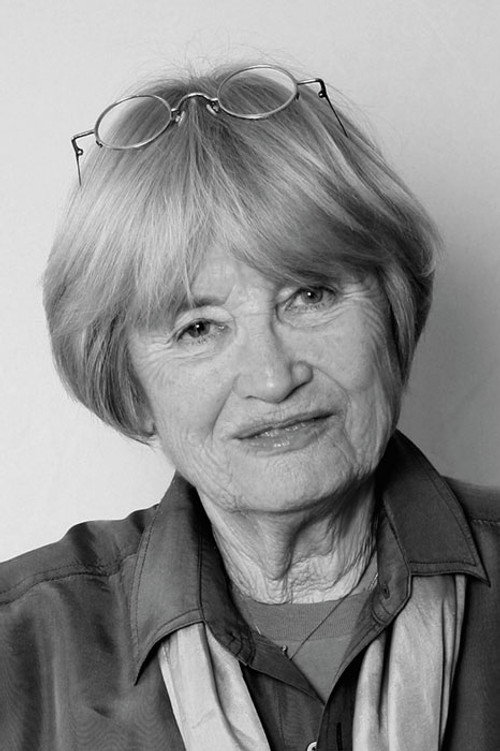
Jacqueline Veuve
- Also:
- Writer
- Producer
In short · Directed for four decades — 9 credits.
Remembered for
Ranked by community engagement + sustained interest across this person's credits in our database.
Help complete this page
We’re missing one-line descriptor. Sign in to add what you know.
Biography
Jacqueline Veuve (29 January 1930 – 18 April 2013) was a Swiss filmmaker known for "ethnographical cinema." She has been referred to as the "great lady of the Swiss documentary film." She received a Lifetime Achievement Award from the 2013 Swiss Film Prize.
Jacqueline Reber was born in Payerne, Switzerland, in 1930 to Maurice Reber and Yvonne Reymond.
After studying in Lausanne, she attended the School of Library and Information Science in Geneva (1952–1953). Veuve then went to Paris to work on her diploma thesis and she met the French filmmaker and ethnologist Jean Rouch in 1955 at the Museum of Man.
She made her first short film *Le Panier à viande* in 1966 with Swiss director Yves Yersin. In the early 1970s she spent time at the Massachusetts Institute of Technology to work with British documentary filmmaker Richard Leacock and during her time there, she made two short films about the women's movement in the United States.
According to Maire, her interest in ethnology was revealed through film.
Jacqueline Veuve had a strong sense of attitude, of everything that has to be shown or left out so that the audience can understand. Examples of this are the film series on the “wood professions”, the “Métiers du bois” such as the films *“Claude Lebet, luthier”* (*“Claude Lebet, violin maker”*, 1988), *“Armand Rouiller, fabricant de luges”* (*“Armand Rouiller, Schlittenmacher”*, 1987) or *“Marcellin Babey, tourneur sur bois”* (*“Marcellin Babey, Drechsler”*, 1989) or the *“Chronique vigneronne”* (1999) on viticulture and the *“Chronique paysanne en Gruyère”* (1990), the farmer's chronicle. At Jacqueline Veuve, complex alpine cheese becomes a completely transparent matter. And better still: a compelling story. Her masterful gift of description allows her to go on: She stages reality so much that tension arises while making the cheese. Or when cutting shingles in Valais.
In 1974, Veuve founded her own film production company in Lausanne, Aquarius Films. Some of her films were commissioned and others were done on a freelance basis. Her first full-length documentary *La Mort du grand-père ou Le Sommeil du juste* (*The death of the grandfather or: The sleep of the just*) was shown at the Locarno Film Festival in 1978.
Her last documentary premiered in 2012. Titled *Vibrato*, it was about the Friborg choir of the Collège St-Michel.
Jacqueline Veuve made a total of 14 full-length films, including some feature films (*Parti sans laisser d'address* 1982; *L'Évanouie* 1992). Throughout her lifetime, she "shot more than 60 short and feature documentaries presented in festivals around the world and crowned with international awards."
Jacqueline Veuve married Léopold Veuve in 1956 and had two children.
Filmography · 8 of 8
Director
8 creditsLes métiers du bois(2006)
Director
FilmJour de marché(2002)
Director
Film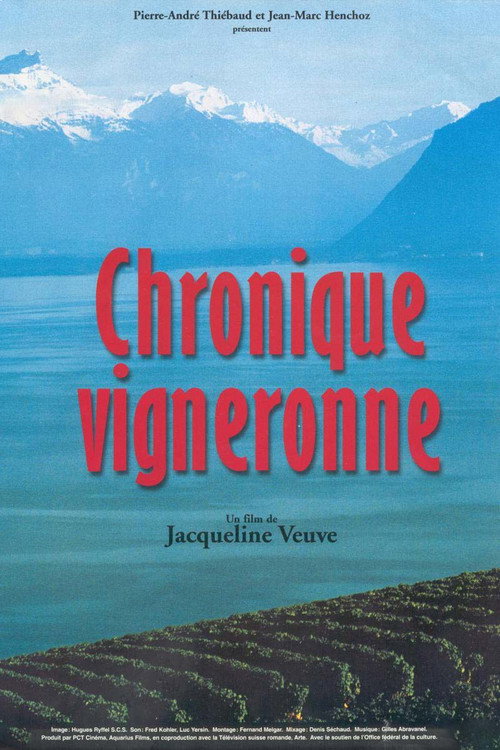
Chronique vigneronne(1999)
Director
Film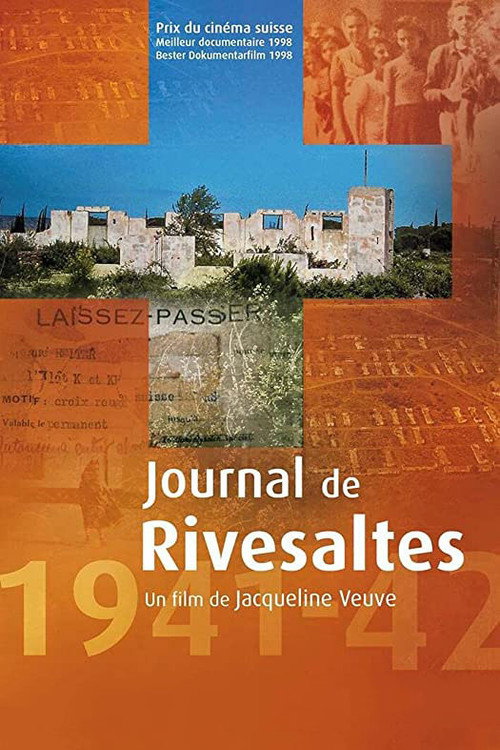
Journal de Rivesaltes 1941-1942(1997)
Director
FilmL'homme des casernes(1994)
Director
FilmChronique paysanne en Gruyère(1991)
Director
Film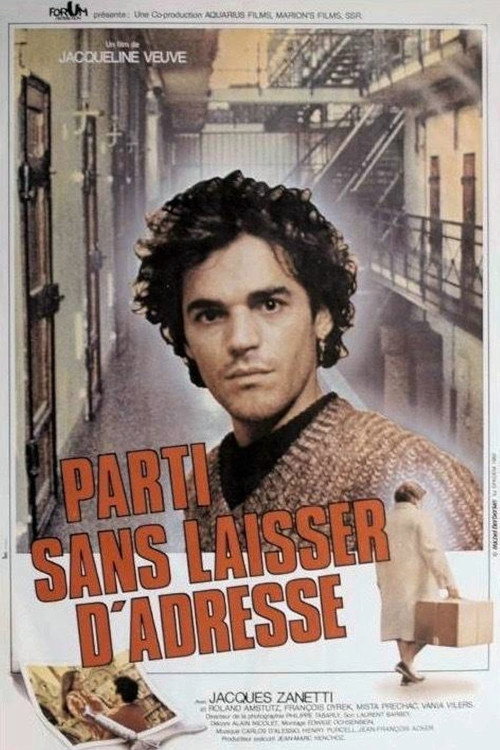
Parti sans laisser d'adresse(1982)
Director
Film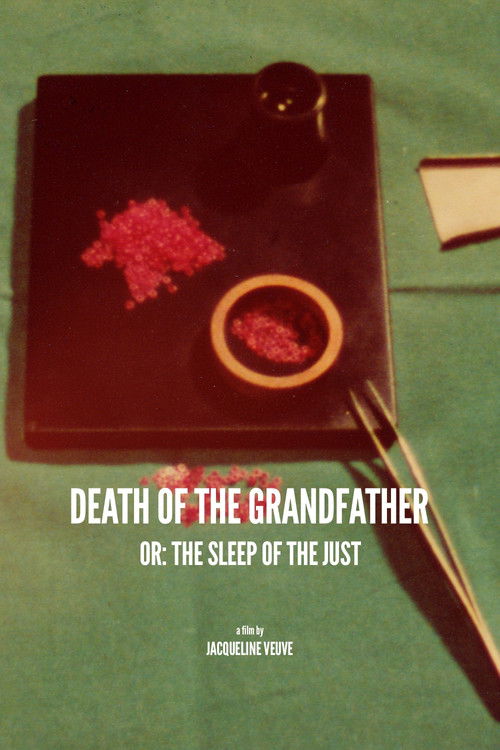
La mort du grand-père ou le sommeil du juste(1978)
Director
Film
Memorable quotes
Browse all →No quotes logged for Jacqueline Veuve yet — add the first memorable line below.
Got a quote we’re missing?
Submit a line from any film, show, or game.
Additional credits1Show
Non-headline appearances — talk-show, awards-show, panel, and archive-footage credits, kept separate from the main filmography.
- Chère JacquelineSelf · 2005
Edit history
Loading edit history…
Comments (0)
on Jacqueline VeuveNo comments yet. Be the first to share what you think.