
Company
Selznick International Pictures
David O. Selznick's boutique prestige house, which won back-to-back Best Picture Oscars for Gone with the Wind and Rebecca, then dissolved itself at the height of its glory (1935-1943).
2 projects
About
The company's trademark symbolized the paradox from the start: a hand-painted Southern colonial mansion, serene behind a lawn, fading up before every film. It was the facade of the old studio in Culver City where David O. Selznick established his company, and it would come to represent the studio's most significant creation — the plantation world of *Gone with the Wind*. Yet within a few years of that film's release, Selznick International Pictures had won Hollywood's highest honor twice and then, at the height of its success, chose to dissolve.
An independent's gamble
Selznick International was founded in 1935 out of one man's frustration with the studio system. David O. Selznick had previously worked in production at RKO and served as a vice president at MGM — where he was also Louis B. Mayer's son-in-law — but he wanted to be answerable only to his own taste. Financed primarily by sportsman and financier John Hay "Jock" Whitney, who chaired the board, Selznick established a deliberately small operation on the former RKO-Pathé lot. Its model was the opposite of a factory line: a few lavish, tasteful A-pictures each year, distributed through United Artists, with every frame scrutinized by Selznick's obsessive attention and his famous flood of memos.
The gamble paid off in prestige almost immediately. *A Star Is Born* (1937), one of the earliest full-Technicolor dramas, and the swashbuckling *The Prisoner of Zenda* that same year established the house style: handsome, star-driven, and impeccably produced. The screwball satire *Nothing Sacred* and the Swedish import *Intermezzo* — which introduced Ingrid Bergman to American audiences — followed. Selznick was proving that a lone producer could outperform the majors at their own game.
Two years, two Best Pictures
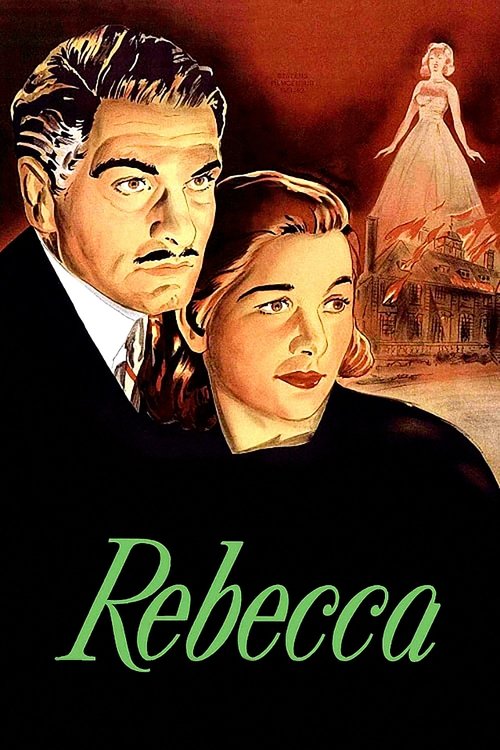
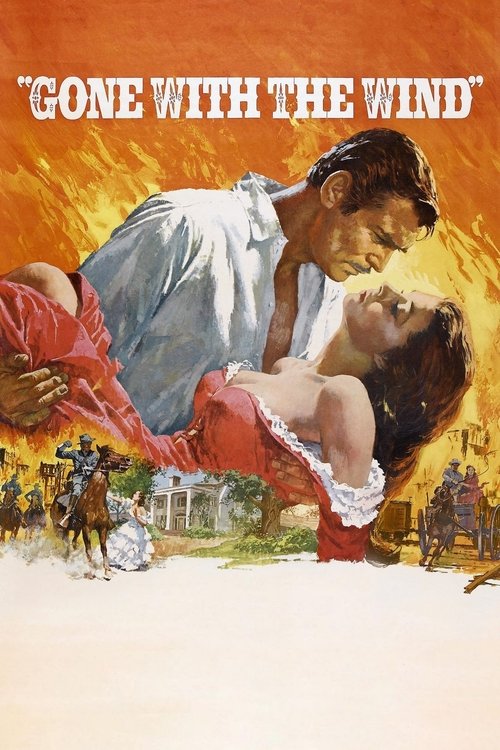
Then came the two films that immortalized the company and, in a sense, ended it. *Gone with the Wind* (1939), an epic that consumed years of Selznick's life, a nationwide casting search, and a famously burning backlot, won the Academy Award for Best Picture. The very next year, *Rebecca* (1940) — Alfred Hitchcock's first American film — won it again. No independent had ever achieved such a streak.
At its commercial and critical peak, Selznick International stopped making films.
The decision was less romantic than the films. By 1940 the studio was the top-grossing in Hollywood, and that was the problem: with no factory to reinvest the profits in, Selznick faced a crippling tax bill, and the exhausting effort of *Gone with the Wind* had left him drained. He and his partners agreed with the IRS to liquidate the company within three years, distributing its profits as capital gains rather than ordinary income. Rather than run a studio, Selznick found it far more profitable to broker talent — loaning out the stars and artists under contract to him, among them Bergman, Joan Fontaine, and Hitchcock, to other producers at a steep markup.
The dissolution and after
*Rebecca* was the last film released under the Selznick International name. The wind-down continued through the early 1940s and was complete by 1943, the assets divided and sold among the partners exactly as the tax agreement required. Selznick sold his interest in *Gone with the Wind* to MGM's parent, Loew's, and the Whitney money exited. The Culver City lot continued under a succession of owners, and the sprawling "40 Acres" backlot remained in use for decades more as a rental stage for other people's stories.
Selznick himself continued under new banners — Vanguard Films and David O. Selznick Productions, and later the Selznick Releasing Organization — producing *Since You Went Away*, *Spellbound*, and *Duel in the Sun*. But he never again matched the concentrated success of the studio that bore his name.
Selznick International endures because it disproved the era's central assumption. The great pictures, it was believed, could come only from the great factories; Selznick showed that a single producer with money, taste, and nerve could beat them outright — and then, having proved it twice in two years, walked away. Its mansion logo remains an emblem of that brief, bright idea: that a movie studio could be, in essence, the extension of one man's will.
Projects (2)
A platform appears here when one of this studio's titles streams on it. Click to filter — pick several to combine.


People here
Work at Selznick International Pictures? Add it to your profile →
Reviews
Sign in to review Selznick International Pictures.
No reviews yet.